The wheel hub motor, also known as an in-wheel motor, represents a remarkable innovation in the field of electric mobility. Its development history is a fascinating journey that encompasses technological breakthroughs, engineering ingenuity, and a growing demand for more efficient and versatile transportation solutions. As a wheel hub motor supplier, I am thrilled to share the story of how this revolutionary technology came to be and how it has evolved over the years.

The Early Beginnings
The concept of integrating a motor directly into the wheel hub dates back to the late 19th century. During this period, inventors were actively exploring ways to power vehicles using electricity, as the limitations of internal combustion engines became increasingly apparent. The idea of placing a motor inside the wheel offered several advantages, including simplified drivetrains, reduced weight, and improved efficiency.
One of the earliest pioneers in wheel hub motor technology was Ferdinand Porsche. In 1897, Porsche developed the Lohner - Porsche Mixte Hybrid, a vehicle that featured electric wheel - hub motors on the front wheels. This innovative design allowed for independent control of each wheel, enhancing the vehicle's maneuverability. However, at the time, the technology faced significant challenges. Battery technology was in its infancy, and the motors were heavy, inefficient, and expensive to produce. As a result, widespread adoption of wheel hub motors did not occur, and the automotive industry continued to focus on internal combustion engines.
The Mid - 20th Century Resurgence
The interest in wheel hub motors resurfaced in the mid - 20th century, driven by concerns about environmental pollution and the search for more energy - efficient transportation solutions. During this period, several research projects were launched to explore the potential of wheel hub motor technology.
One notable development was the Citroën HY Van electric conversion project in the 1950s. Engineers working on this project installed wheel hub motors in the vehicle's rear wheels, aiming to improve its energy efficiency and payload capacity. While the project demonstrated the feasibility of wheel hub motors, it was again limited by the available technology. The motors were not powerful enough for heavy - duty applications, and issues related to heat dissipation and reliability remained unresolved.
The Modern Era of Wheel Hub Motors
The real turning point for wheel hub motors came in the late 20th and early 21st centuries, thanks to significant advancements in several key technologies. These advancements have addressed many of the limitations that previously hindered the widespread adoption of wheel hub motors.
Battery Technology
The development of high - energy - density batteries, such as lithium - ion batteries, has been a game - changer for electric vehicles, including those with wheel hub motors. These batteries can store more energy in a smaller and lighter package, allowing wheel hub motor vehicles to have longer ranges and better performance. The improved energy - to - weight ratio has also made it more practical to install multiple wheel hub motors in a single vehicle.
Motor Design and Materials
Modern wheel hub motors benefit from advances in motor design and the use of high - performance materials. Brushless DC motors, for example, have become the standard in wheel hub motor applications. They offer higher efficiency, lower maintenance requirements, and better controllability compared to traditional brushed motors. Additionally, the use of rare - earth magnets in motor construction has increased the power density of wheel hub motors, enabling them to deliver more torque and power in a smaller size.
Control Systems
Sophisticated control systems have also played a crucial role in the development of wheel hub motors. These systems allow for precise control of each motor, enabling features such as traction control, stability control, and torque vectoring. By adjusting the power output of individual wheel hub motors, vehicles can achieve better handling, improved safety, and enhanced performance.
Applications of Wheel Hub Motors
Today, wheel hub motors are used in a wide range of applications, from small electric vehicles to large industrial machinery.
Electric Bicycles and Scooters
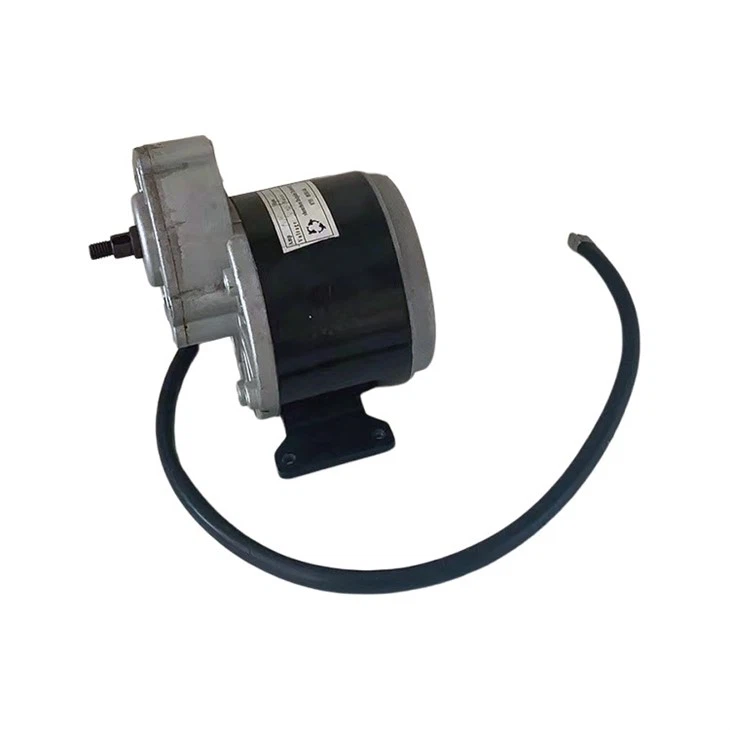
One of the most common applications of wheel hub motors is in electric bicycles and scooters. These motors provide a simple and efficient way to add electric assistance to human - powered vehicles. For example, our 24V 350W Miniature Multipurpose Motor is ideal for small electric bikes and scooters, offering reliable performance and easy installation.
Electric Cars
In the automotive industry, wheel hub motors are being explored as a way to improve the efficiency and performance of electric cars. By eliminating the need for a traditional drivetrain, wheel hub motors can reduce the weight and complexity of the vehicle, leading to better energy efficiency and increased interior space. Some high - performance electric concept cars have already incorporated wheel hub motors to achieve advanced driving dynamics, including torque vectoring for improved handling.
Industrial Vehicles
Wheel hub motors are also finding applications in industrial vehicles, such as forklifts and automated guided vehicles (AGVs). These vehicles require precise control and high torque at low speeds, and wheel hub motors are well - suited to meet these requirements. Our 60V 800W Brushless Hub Motor for Fat Bike can also be adapted for certain industrial applications where medium - power and high - reliability motors are needed.
High - Performance Vehicles
For high - performance electric vehicles, extremely powerful wheel hub motors are being developed. Our 60V 8000W Interior PM Brushless Motor is designed for high - power applications, capable of delivering exceptional performance in demanding environments.
The Future of Wheel Hub Motors
The future of wheel hub motors looks promising. As technology continues to advance, we can expect to see even more widespread adoption of this innovative technology.
Integration with Autonomous Vehicles
Wheel hub motors are well - suited for use in autonomous vehicles. Their independent control capabilities allow for precise steering, braking, and acceleration, which are essential for autonomous driving systems. In the future, we may see more self - driving cars and other vehicles equipped with wheel hub motors to achieve safer and more efficient operations.
Expansion in Renewable Energy - Powered Vehicles
As the world moves towards a more sustainable future, wheel hub motors will likely play a significant role in renewable energy - powered vehicles. For example, they can be integrated with solar - powered electric vehicles or hydrogen - fuel - cell vehicles, providing a more efficient and environmentally friendly way to convert energy into motion.
Contact Us for Your Wheel Hub Motor Needs
As a leading wheel hub motor supplier, we are committed to providing high - quality products and excellent customer service. Whether you are in the electric bicycle industry, automotive sector, or industrial applications, we have the right wheel hub motor solution for you. Our team of experts can work with you to understand your specific requirements and recommend the most suitable products.
If you are interested in learning more about our wheel hub motors or have any questions regarding purchasing, please do not hesitate to contact us. We look forward to the opportunity to discuss potential collaboration and help you find the ideal wheel hub motor for your project.
References
- Johnson, R. (2015). "Advances in Electric Vehicle Technology". Elsevier.
- Smith, A. (2018). "The History and Future of In - Wheel Motors". SAE International Journal.
- Brown, C. (2020). "Sustainable Mobility: The Role of Wheel Hub Motors". Renewable Energy Institute Report.