

Hey there! As a wheel hub motor supplier, I'm super stoked to dive into how these nifty motors work in a two - wheel - drive system. It's like peeling back the layers of a cool tech onion to see what makes it tick.
Basics of Wheel Hub Motors
First off, let's get a handle on what a wheel hub motor is. Think of it as a motor that's integrated right into the wheel hub. It's not like your typical engine that's tucked away somewhere and then transfers power through a bunch of gears and shafts. Instead, it's right there in the wheel, doing its thing. This setup has some pretty sweet advantages. For starters, it simplifies the drivetrain. You don't need all those extra parts to get the power from the motor to the wheels, which means less weight and less maintenance.
Now, in a two - wheel - drive system, you've got two wheel hub motors, one for each wheel. This gives you a lot of control over how each wheel behaves. It's like having two little powerhouses working independently to move your vehicle forward, backward, or turn it around.
How They Work
Let's break down the working process. At the heart of a wheel hub motor is the principle of electromagnetism. When you pass an electric current through a coil of wire, it creates a magnetic field. In a wheel hub motor, there are a bunch of these coils arranged in a specific pattern. Surrounding these coils are permanent magnets.
When the electric current flows through the coils, the magnetic field generated by the coils interacts with the magnetic field of the permanent magnets. This interaction creates a force that makes the motor rotate. It's kind of like how two magnets either attract or repel each other, but in a more controlled and continuous way to make the wheel spin.
In a two - wheel - drive system, the power supply to each motor is carefully regulated. The controller, which is like the brain of the system, decides how much power to send to each wheel hub motor based on what you're trying to do. If you're going straight, the controller sends equal power to both motors so that they rotate at the same speed. But if you want to turn, the controller can send more power to one motor than the other. For example, when you're making a left turn, the right - hand motor might get more power to make the right wheel spin faster, helping the vehicle turn smoothly.
Types of Wheel Hub Motors in Two - Wheel - Drive Systems
There are different types of wheel hub motors that can be used in a two - wheel - drive system. One common type is the brushless DC motor. These motors are great because they're more efficient and have a longer lifespan compared to brushed motors. The 72V 1500W Interior PM Brushless Motor Two Gears is a prime example. It's got a high power output and two gears, which gives you more flexibility in terms of speed and torque.
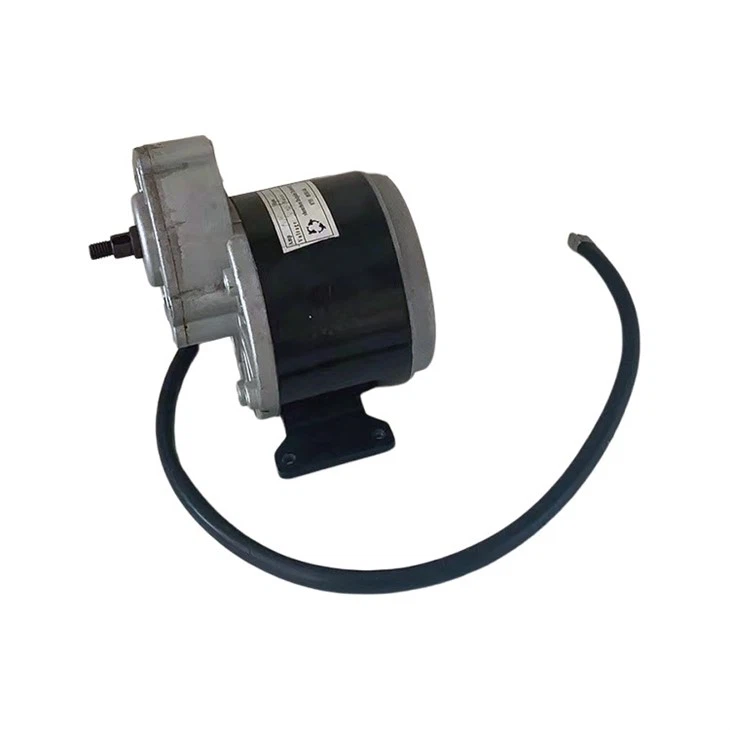
Another type is the miniature multipurpose motor, like the 24V 350W Miniature Multipurpose Motor. These motors are smaller and lighter, making them perfect for applications where space and weight are a concern. They might not have as much power as the larger motors, but they can still get the job done for smaller vehicles or in situations where you don't need a ton of speed or torque.
Then there's the 72V 1200W PM Brushless DC Motor Servo Single Gear. This motor combines the benefits of a brushless DC motor with servo control. Servo control allows for very precise control of the motor's position, speed, and torque. It's great for applications where you need accurate movement, like in some electric bikes or small robots.
Advantages in a Two - Wheel - Drive System
In a two - wheel - drive system, having wheel hub motors offers some unique advantages. One of the biggest is the ability to do what's called torque vectoring. Torque vectoring means that you can control the amount of torque (the turning force) applied to each wheel independently. This is super useful when you're cornering. By applying more torque to the outer wheel during a turn, you can make the vehicle turn more smoothly and quickly. It's like giving your vehicle a better sense of balance and agility.

Another advantage is the regenerative braking. When you slow down or brake your vehicle, the wheel hub motors can act as generators. They convert the kinetic energy of the moving vehicle back into electrical energy, which can then be stored in the battery. This not only helps to recharge the battery but also reduces wear and tear on the brakes.
Applications
The two - wheel - drive wheel hub motor system has a wide range of applications. One of the most common is in electric bikes. With two wheel hub motors, an electric bike can have better acceleration, better climbing ability, and more stable handling. It's also popular in some small electric cars and scooters. These vehicles benefit from the simplicity and efficiency of the wheel hub motor setup.
In the world of robotics, two - wheel - drive wheel hub motor systems are used in mobile robots. They allow the robots to move around easily and precisely, making them suitable for tasks like delivery, surveillance, or exploration.
Conclusion
So, there you have it, a rundown of how wheel hub motors work in a two - wheel - drive system. These motors are a really cool piece of technology that offers a lot of benefits in terms of efficiency, control, and flexibility. Whether you're looking to build an electric bike, a small electric vehicle, or a robot, a two - wheel - drive wheel hub motor system could be a great choice.
If you're interested in incorporating wheel hub motors into your project, we've got a wide range of options available. From high - power motors to small, efficient ones, we've got something for everyone. Feel free to reach out and start a conversation about your specific needs. We're here to help you find the perfect wheel hub motors for your two - wheel - drive system.
References
- Principles of Electric Machines and Power Electronics by P. C. Sen
- Electric Vehicle Technology Explained by John Hayes


