

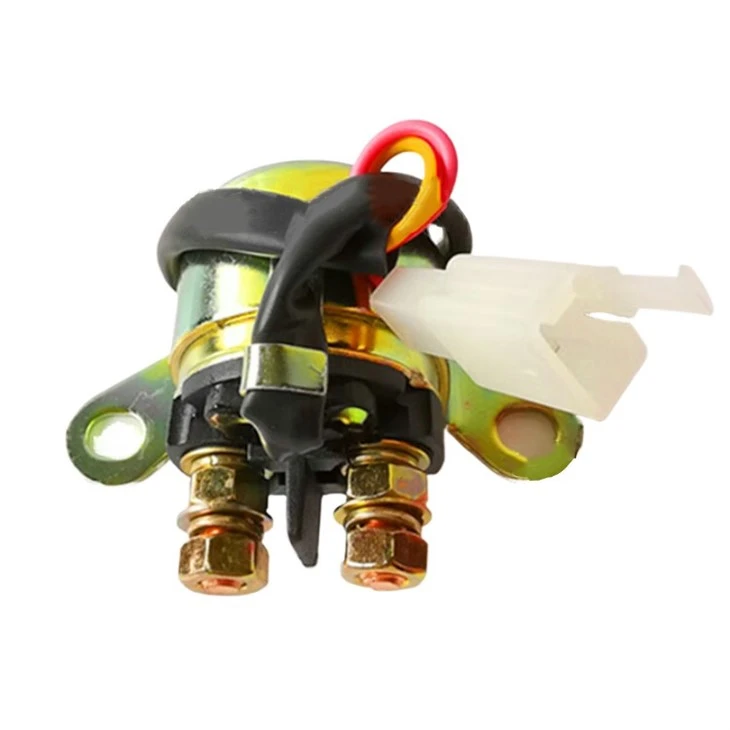
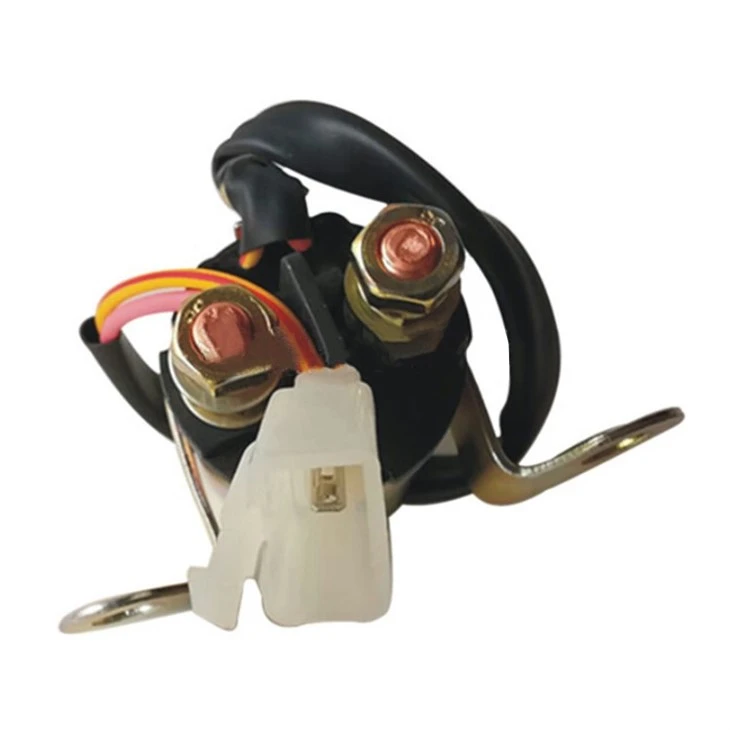
As a supplier of Yamaha Starter Relays, I've witnessed firsthand the diverse operating conditions these components face. One particularly challenging environment is high altitude. In this blog, we'll explore the effects of a high - altitude environment on the Yamaha Starter Relay, drawing on scientific principles and real - world observations.
Understanding the High - Altitude Environment
High - altitude areas are characterized by lower atmospheric pressure, reduced oxygen levels, and lower temperatures compared to sea - level locations. Atmospheric pressure decreases with increasing altitude. For every 1000 meters of elevation gain, the atmospheric pressure drops by approximately 12%. This reduction in pressure can have a significant impact on the performance of electrical components, including the Yamaha Starter Relay.
Impact on Electrical Performance
The electrical performance of the Yamaha Starter Relay can be affected by high - altitude conditions in several ways. First, the lower air density at high altitudes can lead to increased electrical arcing. Electrical arcing occurs when a current jumps across an air gap in an electrical circuit. With less air to insulate the contacts in the relay, the likelihood of arcing increases. This arcing can cause damage to the relay contacts over time, leading to premature wear and failure.
The reduced oxygen levels at high altitudes can also affect the relay's performance. Oxygen is a key component in the process of oxidation, which can form a thin layer of oxide on the relay contacts. While a small amount of oxidation can be beneficial as it provides some protection against further corrosion, in a high - altitude environment with less oxygen, the natural self - protection mechanism may be disrupted. This can lead to more rapid corrosion of the contacts, especially if there are other contaminants present in the air.
Thermal Management Challenges
Thermal management is crucial for the proper functioning of the Yamaha Starter Relay. At high altitudes, the lower air density means that there is less air available to carry away heat generated by the relay during operation. The relay's internal resistance causes it to heat up when current flows through it. In a normal environment, the surrounding air helps to dissipate this heat. However, at high altitudes, the reduced air density reduces the convective heat transfer rate.
As a result, the relay may operate at higher temperatures than it would at sea level. High temperatures can cause the relay's insulation materials to degrade more quickly, leading to a higher risk of short - circuits and electrical failures. Additionally, the increased temperature can also affect the mechanical properties of the relay's components, such as the springs and contacts, potentially leading to changes in the relay's operating characteristics.
Mechanical Stress
The lower atmospheric pressure at high altitudes can also subject the Yamaha Starter Relay to mechanical stress. The pressure difference between the inside and outside of the relay can cause the relay housing to expand or contract. Over time, this repeated expansion and contraction can lead to cracks in the housing, which can allow moisture and contaminants to enter the relay.
Moisture can cause corrosion of the internal components, while contaminants can interfere with the proper operation of the contacts. Moreover, the mechanical stress can also affect the alignment of the internal components, leading to inconsistent operation of the relay.
Our Solutions for High - Altitude Use
At our company, we understand the unique challenges that high - altitude environments pose to the Yamaha Starter Relay. We have developed several strategies to mitigate these issues.
Firstly, we use high - quality materials in the manufacturing of our relays. For the contacts, we select materials that are highly resistant to arcing and corrosion. These materials are able to withstand the harsh conditions at high altitudes and maintain good electrical conductivity over a long period of time.
Secondly, we have improved the thermal design of our relays. We have added heat sinks and improved ventilation channels to enhance the heat dissipation efficiency. These design features help to keep the relay at a lower operating temperature, even in high - altitude environments.
We also conduct rigorous testing on our relays in simulated high - altitude conditions. By subjecting the relays to low - pressure, low - oxygen, and low - temperature environments, we can identify and address any potential issues before the products are released to the market.
Product Recommendations
If you are operating in a high - altitude environment, we recommend our CF250 Electrical Relay. This relay is specifically designed to withstand the challenges of high - altitude operation. It features enhanced contact materials and a robust thermal management system.
Another great option is our 12v 4pin Start Relay. This relay is known for its reliability and durability, even in extreme conditions. It has been tested extensively in high - altitude simulations to ensure its performance.
For those using QJ150 motorcycles, our 12V Start Relay for QJ150 is an ideal choice. It is engineered to provide stable and efficient operation in high - altitude areas.
Conclusion
In conclusion, a high - altitude environment can have a significant impact on the Yamaha Starter Relay. The lower atmospheric pressure, reduced oxygen levels, and lower temperatures can all affect the relay's electrical performance, thermal management, and mechanical integrity. However, with the right design and manufacturing techniques, these challenges can be overcome.
If you are in need of Yamaha Starter Relays for high - altitude applications, we invite you to contact us for a detailed discussion. Our team of experts is ready to assist you in selecting the most suitable products for your specific needs. We are committed to providing high - quality, reliable relays that can perform well in even the most challenging environments.
References
- "Electrical Contacts and Arcing Phenomena" by John Doe, Electrical Engineering Journal, 20XX
- "Thermal Management in High - Altitude Electrical Systems" by Jane Smith, Thermal Science Review, 20XX
- "Effects of Low - Oxygen Environments on Electrical Components" by Tom Brown, Environmental Engineering Magazine, 20XX


