

Hey there, fellow motorcycle enthusiasts! As a supplier of 125 Starter Relays, I've seen my fair share of issues with these little but crucial components. Today, I'm gonna walk you through how to diagnose a faulty 125 Starter Relay.
First off, let's understand what a starter relay does. It's like the middleman between your motorcycle's battery and the starter motor. When you turn the ignition key, the starter relay gets a signal. It then closes an electrical circuit, allowing a large amount of current to flow from the battery to the starter motor. This current makes the starter motor spin, which in turn cranks the engine and gets your bike up and running.
Signs of a Faulty 125 Starter Relay
The first step in diagnosing a problem is to look for the tell - tale signs. One of the most obvious signs is when you turn the key, and nothing happens. I mean, there's no click sound, and the engine doesn't even attempt to start. This could be because the relay isn't closing the circuit properly.
Another sign is if you hear a rapid clicking sound when you turn the key. This usually indicates that the relay is trying to close the circuit but can't hold it. It might be due to a weak connection, a worn - out relay, or an issue with the electrical supply.
Sometimes, the starter motor might engage, but it runs very slowly. This could be a sign that the relay is not allowing enough current to reach the starter motor. And in some cases, the starter motor might even run continuously, which is a serious problem. It means the relay is stuck in the closed position, and current is constantly flowing to the starter motor.
Tools You'll Need
Before you start diagnosing the relay, you'll need a few tools. A multimeter is an absolute must. It'll help you measure voltage, resistance, and continuity. You'll also need a set of wrenches to remove any covers or brackets that might be in the way. And a test light can come in handy to quickly check for the presence of electricity.
Step - by - Step Diagnosis
Step 1: Locate the Starter Relay
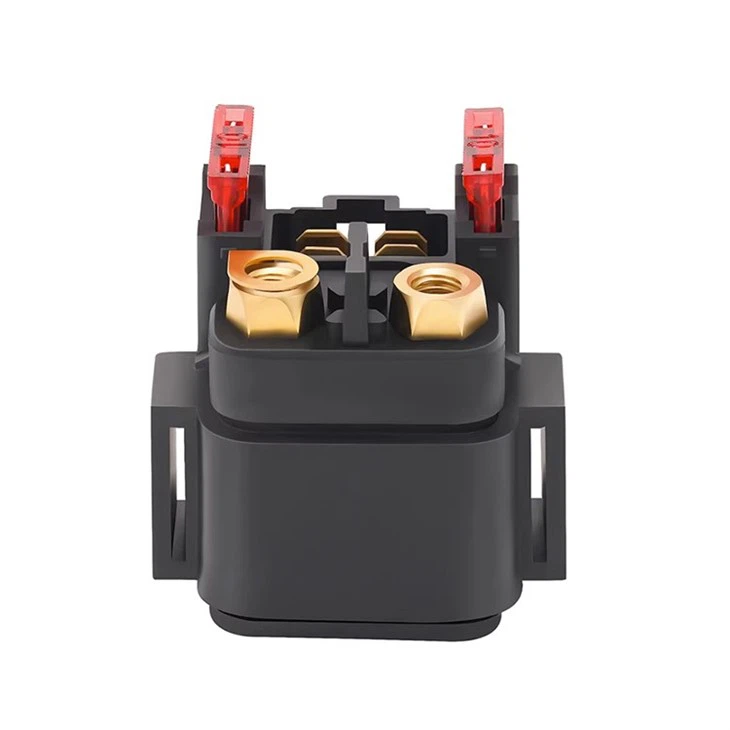
The first thing you gotta do is find the starter relay. On most 125 motorcycles, it's located near the battery or the starter motor. It's usually a small, rectangular box with a few wires connected to it. Refer to your motorcycle's service manual if you're having trouble finding it.

Step 2: Visual Inspection
Once you've located the relay, give it a good visual inspection. Look for any signs of damage, like cracks, burns, or corrosion on the relay housing or the terminals. Corrosion can prevent a proper electrical connection, so if you see any, you might need to clean it with a wire brush and some electrical contact cleaner.
Step 3: Check the Fuses
Before you start testing the relay, check the fuses related to the starter circuit. A blown fuse can cause the same symptoms as a faulty relay. Use a multimeter or a test light to check if the fuses are intact. If a fuse is blown, replace it with one of the same amperage rating.
Step 4: Test the Relay with a Multimeter
Now, it's time to test the relay using a multimeter. Set the multimeter to the resistance (ohms) setting. First, locate the control circuit terminals on the relay. These are usually the smaller terminals. Measure the resistance between these terminals. A good relay should have a resistance reading within the range specified in your motorcycle's service manual. If the reading is infinite, it means there's an open circuit in the control coil, and the relay is faulty.
Next, measure the resistance between the power circuit terminals (the larger terminals). A good relay should have very low resistance when it's closed. If the resistance is high, it indicates a problem with the contacts inside the relay.
Step 5: Check the Voltage
Set the multimeter to the voltage setting. With the ignition switch on, check the voltage at the control circuit terminals. You should get a voltage reading close to the battery voltage. If there's no voltage, there might be a problem with the wiring or the ignition switch.
Then, check the voltage at the power circuit terminals. When you turn the ignition key, the voltage should jump from near zero to close to the battery voltage if the relay is working properly.
Step 6: Swap the Relay
If you have a spare relay or you can borrow one from a similar motorcycle, try swapping it with the suspected faulty relay. If the engine starts normally after swapping the relay, then you've confirmed that the original relay was the problem.
Common Causes of Relay Failure
Relays can fail for several reasons. One of the most common causes is overheating. If the relay is constantly under a heavy load or if there's poor ventilation around it, it can overheat and damage the internal components.
Corrosion is another big culprit. Moisture can get into the relay housing, causing the terminals to corrode. This can lead to poor electrical connections and eventually, relay failure.
Mechanical wear and tear also play a role. Over time, the contacts inside the relay can wear out, making it difficult for the relay to close the circuit properly.
Replacement and Prevention
If you've diagnosed that the relay is faulty, it's time to replace it. You can find a high - quality 125 Starter Relay at our store. We offer a wide range of relays suitable for different 125 motorcycles.
To prevent future relay problems, make sure your motorcycle's electrical system is in good condition. Keep the battery terminals clean and tight, and check the wiring for any signs of damage regularly. And try to avoid overloading the electrical system by using too many accessories.
Other Related Relays
We also supply Yamaha Starter Relay for Yamaha motorcycles. Yamaha bikes are known for their performance, and having a reliable starter relay is crucial for a smooth start.
And if you have a motorcycle with a GY6 engine, our Motorcycle Starter Relay GY6 is a great option. These relays are specifically designed to handle the electrical requirements of GY6 engines.
Contact Us for Purchase
If you're in the market for a new starter relay or have any questions about the diagnosis process, don't hesitate to reach out. We're here to help you get your motorcycle back on the road in no time. Our team of experts can assist you in choosing the right relay for your bike.
References
- Motorcycle Service Manuals
- Electrical Systems for Dummies
- Online Motorcycle Forums


