

When it comes to electromechanical systems, selecting the right brushless DC (BLDC) motor can be a game-changer. As a seasoned BLDC motor supplier, I've encountered numerous clients facing the daunting task of choosing the perfect motor for their applications. In this blog post, I'll share insights and considerations to help you navigate through this process effectively.
Understanding Brushless DC Motors
Before delving into the selection process, it's crucial to understand what BLDC motors are and how they work. Unlike traditional brushed DC motors, BLDC motors use electronic commutation instead of brushes and commutators. This design offers several advantages, including higher efficiency, longer lifespan, reduced maintenance, and better speed control.
BLDC motors are widely used in various applications, such as electric vehicles, industrial automation, robotics, aerospace, and home appliances. Their ability to provide high torque at low speeds, combined with precise control, makes them an ideal choice for many demanding applications.
Key Considerations for Motor Selection
1. Application Requirements
The first step in choosing the right BLDC motor is to clearly define your application requirements. Consider the following factors:
- Torque: Determine the amount of torque required to drive your load. Torque is the rotational force that causes an object to rotate. It's typically measured in Newton-meters (Nm) or ounce-inches (oz-in). For applications that require high torque at low speeds, such as electric vehicles or conveyor systems, you'll need a motor with a high starting torque.
- Speed: Identify the required speed range for your application. BLDC motors can operate at a wide range of speeds, from a few hundred RPM to tens of thousands of RPM. Consider the maximum and minimum speeds your application requires, as well as the speed control accuracy needed.
- Power: Calculate the power requirements of your application. Power is the rate at which work is done and is typically measured in watts (W). The power required by your motor depends on the torque and speed requirements, as well as the efficiency of the motor.
- Duty Cycle: Determine the duty cycle of your application. The duty cycle is the percentage of time the motor will be operating under load. For applications with a continuous duty cycle, such as industrial pumps or fans, you'll need a motor that can handle continuous operation without overheating. For applications with a intermittent duty cycle, such as servo motors in robotics, you can choose a motor with a higher power rating that can handle short bursts of high load.
2. Motor Size and Dimensions
The physical size and dimensions of the motor are also important considerations. Make sure the motor you choose fits within the available space in your application. Consider the length, diameter, and shaft size of the motor, as well as any mounting requirements.
3. Efficiency
Efficiency is a critical factor in motor selection, especially for applications that require continuous operation. A more efficient motor will consume less power, generate less heat, and have a longer lifespan. Look for motors with a high efficiency rating, typically expressed as a percentage.
4. Cost
Cost is always a consideration when selecting a motor. However, it's important to balance cost with performance and quality. While a cheaper motor may save you money upfront, it may not meet your performance requirements or have a long lifespan. Consider the total cost of ownership, including the initial purchase price, energy consumption, maintenance, and replacement costs.
5. Controller Compatibility
BLDC motors require a controller to operate. Make sure the motor you choose is compatible with the controller you plan to use. Consider the voltage, current, and communication protocol requirements of the controller.
Choosing the Right Motor for Specific Applications
1. Electric Bikes
Electric bikes are a popular application for BLDC motors. When choosing a motor for an electric bike, consider the following factors:
- Power: Electric bikes typically require motors with a power rating of 250W to 1000W. The power rating of the motor will determine the speed and acceleration of the bike.
- Voltage: Electric bikes typically use motors with a voltage rating of 24V, 36V, or 48V. The voltage rating of the motor will determine the range and performance of the bike.
- Torque: Electric bikes require motors with a high starting torque to provide smooth acceleration. Look for motors with a torque rating of at least 40 Nm.
- Controller: Electric bikes require a controller to regulate the speed and torque of the motor. Make sure the motor you choose is compatible with the controller you plan to use.
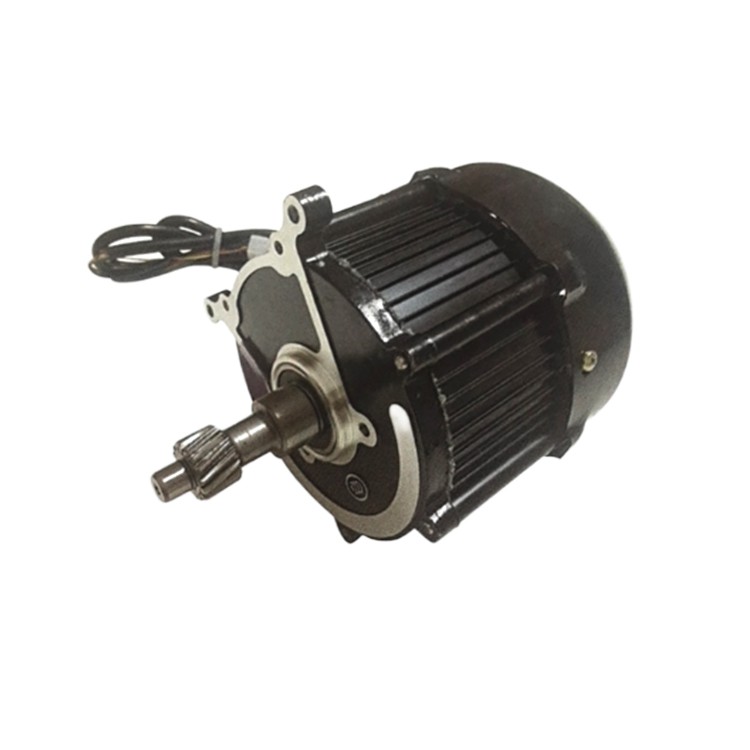
For electric bikes, we offer a range of high-quality BLDC motors, including the 48v 60V Electric 800W Brushless DC Motor and the 48v 60V Electric 500W Brushless DC Motor. These motors are designed to provide high efficiency, reliability, and performance, making them an ideal choice for electric bikes.

2. Industrial Automation
Industrial automation applications require motors that can provide high torque, precise control, and long lifespan. When choosing a motor for industrial automation, consider the following factors:
- Torque: Industrial automation applications typically require motors with a high torque rating to drive heavy loads. Look for motors with a torque rating of at least 100 Nm.
- Speed: Industrial automation applications require motors that can operate at a wide range of speeds. Look for motors with a speed range of at least 1000 RPM to 5000 RPM.
- Accuracy: Industrial automation applications require motors that can provide precise control. Look for motors with a high accuracy rating, typically expressed in terms of position control error or speed control error.
- Reliability: Industrial automation applications require motors that can operate continuously without downtime. Look for motors with a high reliability rating, typically expressed in terms of mean time between failures (MTBF).
For industrial automation applications, we offer a range of high-quality BLDC motors, including the 24V 450W Permanent Magnet Synchronous Motor Ebike. This motor is designed to provide high efficiency, reliability, and performance, making it an ideal choice for industrial automation applications.
Conclusion
Choosing the right brushless DC motor for your application requires careful consideration of several factors, including application requirements, motor size and dimensions, efficiency, cost, and controller compatibility. By understanding these factors and working with a reputable motor supplier, you can select the motor that best meets your needs.
If you're still unsure which motor is right for your application, don't hesitate to contact us. Our team of experts is available to help you choose the right motor and provide you with the technical support you need. We look forward to working with you to find the perfect solution for your electromechanical needs.
References
- "Brushless DC Motor Handbook" by John F. Ostdiek
- "Electric Motors and Drives: Fundamentals, Types, and Applications" by Austin Hughes and Bill Drury
- "Motion Control Basics" by Keith Matthew


