

Hey there, fellow motorcycle enthusiasts! As a long - time supplier of Motorcycle Starter Relays, I've had my fair share of experiences with these nifty little components. Today, I'm gonna walk you through how a motorcycle starter relay connects to the battery.
First off, let's understand what a starter relay is. In simple terms, a starter relay is like a middleman in the electrical system of your motorcycle. Its main job is to control a large current flow with a small one. When you turn the key in your ignition, you're sending a small electrical signal. The starter relay takes this small signal and uses it to switch on a much larger current that's needed to crank the engine.
Now, onto the battery connection. The battery is the heart of your motorcycle's electrical system. It stores electrical energy and provides the power needed to start the engine and run all the electrical components.
The first step in connecting the starter relay to the battery is to locate the battery on your motorcycle. Usually, it's placed in a compartment under the seat or near the engine. Make sure the motorcycle is turned off and the key is removed before you start working on the electrical system. Safety first, folks!
You'll need a few tools for this job - a set of wrenches to remove the battery terminals, a multimeter to check the voltage, and some electrical tape to insulate the connections.
Let's start with the positive terminal of the battery. The positive terminal is usually marked with a plus (+) sign. You'll need to connect a thick gauge wire from the positive terminal of the battery to one of the large terminals on the starter relay. This wire is responsible for carrying the high - current from the battery to the starter motor when the relay is activated.
When you're making this connection, ensure that the wire is securely fastened. You don't want it to come loose while you're riding. Tighten the nut on the terminal with a wrench, but be careful not to overtighten it as you could damage the terminal.
Next, we move on to the negative terminal of the battery. The negative terminal is marked with a minus (-) sign. A ground wire needs to be connected from the negative terminal of the battery to a good ground point on the motorcycle frame. This ground connection is crucial as it completes the electrical circuit.
Most starter relays also have a small terminal that is connected to the ignition switch. This is where the small control signal from the ignition switch comes in. When you turn the key in the ignition, the switch sends a 12 - volt signal to this terminal on the starter relay.
Once the small control signal reaches the starter relay, it activates an electromagnet inside the relay. This electromagnet pulls a switch, allowing the high - current to flow from the battery, through the large terminal on the relay, and to the starter motor.
Let's talk about some of the starter relays we offer. We have the CF250 Electrical Relay. This relay is designed specifically for the CF250 motorcycle models. It's built to handle the electrical demands of these bikes and ensure a reliable start every time.
Another popular option is the Honda VTEC CB400 Starter Relay. If you own a Honda VTEC CB400, this relay is a perfect fit. It's engineered to work seamlessly with the electrical system of this particular motorcycle.
And for those looking for a more general - purpose relay, we have the 12v 4pin Start Relay. This 12 - volt, 4 - pin relay can be used in a variety of motorcycle models. It's a versatile option that provides a reliable starting solution.
Now, let's go over some common mistakes to avoid when connecting the starter relay to the battery. One of the biggest mistakes is using the wrong gauge of wire. If the wire is too thin, it won't be able to carry the high - current needed to start the engine, and it could overheat and cause a fire. Always use a thick gauge wire for the high - current connections.
Another mistake is not properly insulating the connections. Electrical tape is your friend here. Make sure all the exposed wires are covered with electrical tape to prevent short - circuits.
Also, don't forget to double - check the polarity of the connections. Connecting the wires to the wrong terminals can damage the starter relay and other electrical components.
If you're having trouble with the connection or if your motorcycle isn't starting, it could be due to a faulty starter relay. You can use a multimeter to test the relay. Set the multimeter to the resistance mode and check the continuity between the terminals. If there's no continuity or if the resistance is too high, the relay might be bad.
In some cases, the problem could be with the battery itself. Check the battery voltage with a multimeter. A fully charged 12 - volt battery should read around 12.6 volts. If the voltage is significantly lower, the battery might need to be charged or replaced.
As a supplier of Motorcycle Starter Relays, I can tell you that having a reliable starter relay is essential for the smooth operation of your motorcycle. It ensures that your engine starts quickly and efficiently, especially in cold weather.
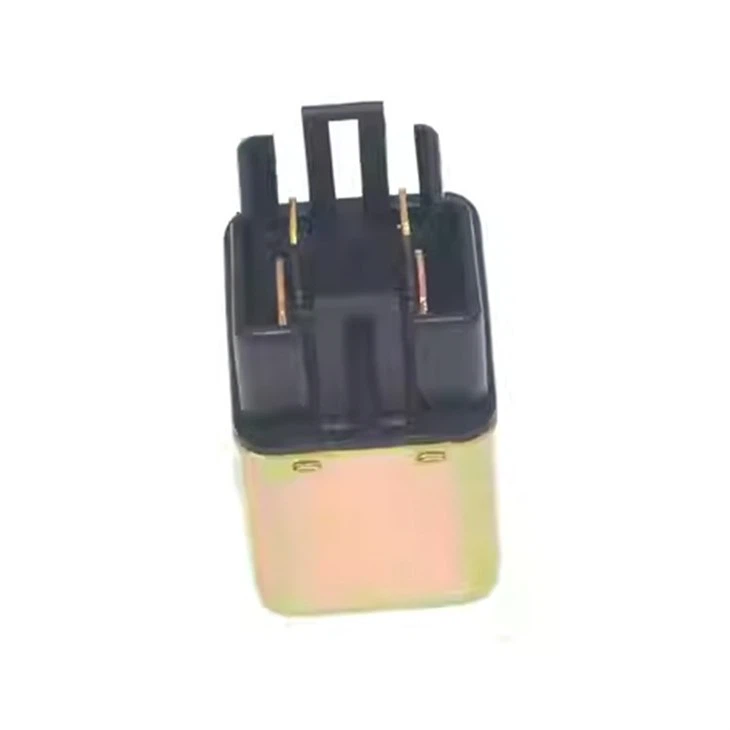

We take pride in offering high - quality starter relays that are built to last. Our relays are made from the best materials and undergo strict quality control checks before they reach you.
If you're in the market for a new starter relay or if you have any questions about connecting the starter relay to the battery, don't hesitate to reach out. We're here to help you get your motorcycle up and running in no time. Whether you're a DIY enthusiast or a professional mechanic, we have the right starter relay for your needs.
So, if you're looking to upgrade or replace your starter relay, consider our products. We're confident that you'll be satisfied with the performance and reliability of our Motorcycle Starter Relays. Let's get your motorcycle back on the road with a reliable start!
References:
- Motorcycle Electrical Systems Manuals
- Various Motorcycle Manufacturer Technical Guides


